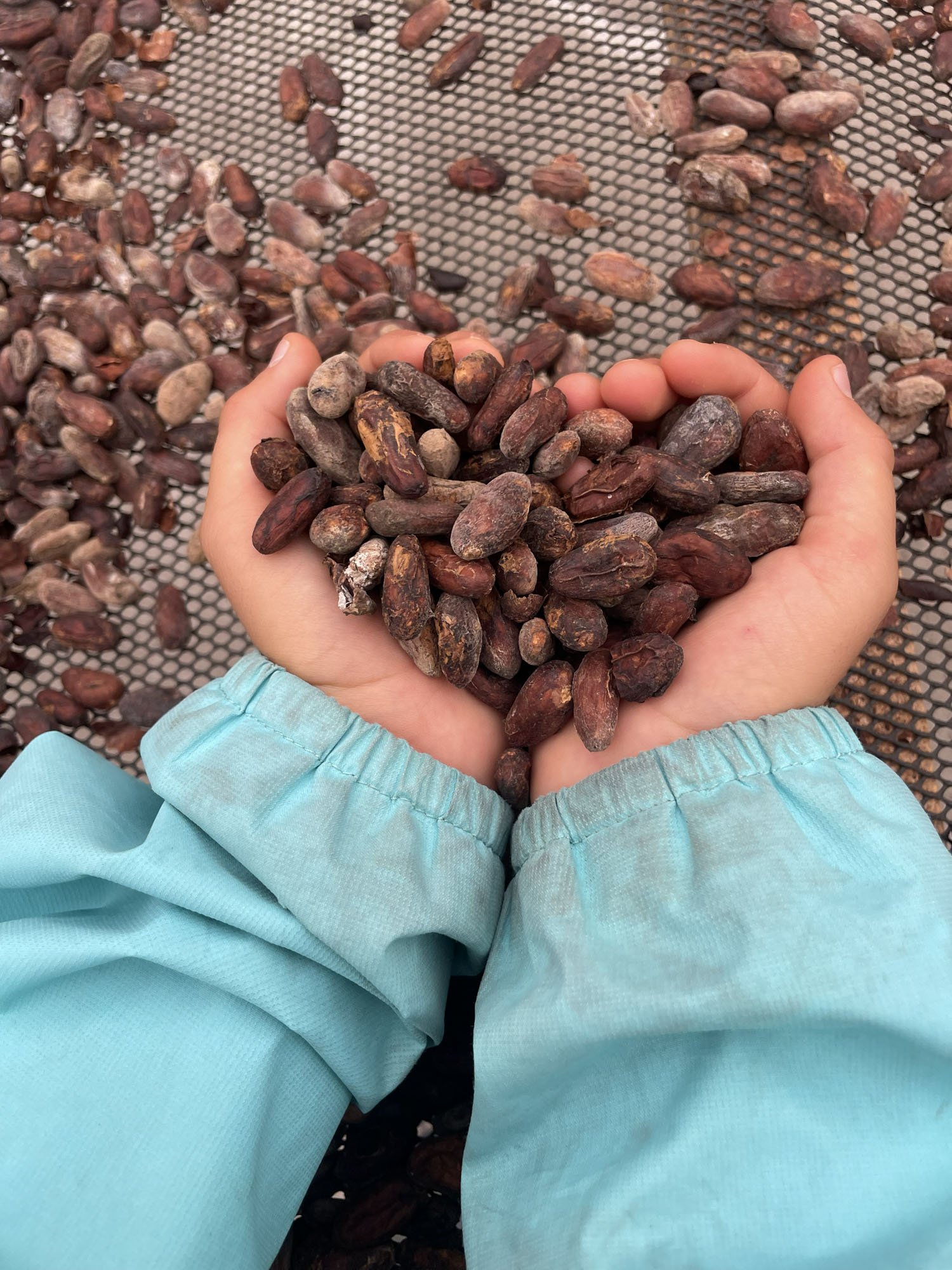

We are still in Mindo and today we went to a chocolate factory!!! First, our guide David sat us down and explained how when you open up a cacao fruit it doesn’t look or smell like cacao or chocolate. It smells fruity. He opened a cacao fruit for us so we could see for ourselves! We also got to taste the seeds. The seeds are not at all like you would expect. They are white, slimy little things. About the size of an almond. We got to taste them and our guide David told us that they taste a little different to everyone. When I put it in my mouth it tasted like strawberries and peaches. I immediately started chewing the thing because that’s what you do with food. But a few seconds later David informed us that you are not supposed to chew them. A little late for that. Anyway, to mom it tasted like guava, and to D it tasted like mango.
After that we learned that there are “Pure” cacao trees and “Hybrid” ones. There are only 10 pure varieties of cacao. But since you can blend them and continue to get hybrids, there are many different flavors. The hybrids have less nutrients and proteins and are therefore sold for less. Big brands like Hershey only use hybrids for this reason. It takes a pure cacao tree 4 years before it first produces fruit. It only takes a hybrid 2 years. This is another reason why big brands use hybrids.

There are two types of diseases that endanger cacao trees. The first is called “Escoba de bruja” (Witches broom). It is called this because it causes all of the leaves to fall from the tree one section at a time. So according to the cacao farmers, at around 11 am, when the shadows are in just the right spot, the shadow of the tree looks like a witches broom. The second type of disease is a fungus that directly attacks the fruit. It is a blue mushroom that rots the fruit inside. There is no pesticide or anything that can kill these diseases. They are working on a pesticide but so far the solution is hybrid cacao trees. Hybrid cacao trees are immune to the diseases.
We then learned that scents from different fruits enhance the flavor of the cacao. They had many different fruits planted around the trees. Cacao is a very absorbent fruit. That is why they can not use pesticides because the fruit will absorb it directly and cause the cacao inside to taste bad.
We then traveled to the place where they ferment the cacao seeds. They put the seeds in a wooden box where the bacteria eats away the white slime on the outside of the seed. This process will only work in a wooden box, because the special bacteria does not live in other materials. After 2 days of that, they are moved to an area to dry. In the summer it takes 2 days to dry and in the winter it takes 5. It takes longer in the winter because it is so humid during Ecuadorian winter. After they are done with that they are moved to the roaster. The roaster reaches up to 120c and looks like a large cylinder with a handle attached to the side.
Someone turns the handle while the dried out seeds are inside. It slowly gets hotter. It can take up to an hour to fully mix and roast the seeds.


They then go to a grinder which turns them into a pastry powder. The paste then goes into a mixer for 5 days where they can add other flavors. The smell was so strong and smelled so good!!! There is a machine, where, after they are mixed, they can have the option to, instead of making a chocolate bar, separate the chocolate into cacao powder and cacao butter. The machine does this with only pressure! Or they can skip that step and make a chocolate bar!! To make it into a bar, they spread it onto a marble table to cool it. The “perfect” temperature is 31c. Any more, and the butter would separate from the chocolate, and any less and you would not get that chocolate bar “Snap!”.
We then went to a stove with a terracotta plate on it where we “cooked” the roasted seeds. They made a popping noise like firecrackers when they were ready. We then peeled off the “shell” of the seed that was more like a layer from a clove of garlic. We then ground it with a cranker by hand insert picture
We then got to taste the chocolate! Finally! My favorite was the 77% pure cacao.


Fun facts:
- Coffee has caffeine and chocolate has Thembromine (not caffeine. The only reason it would have any is because chocolate factories often plant coffee near cacao so the cacao absorbs some of the coffee flavor.)
- Hershey only uses 10% chocolate and the rest is cacao butter (Which is really bad for you btw)and fillers/chemicals
- White chocolate has no real chocolate in it. It made of cacao butter and loads of sugar
Leave a Reply